
By Christopher Vitale April 30, 2026
Every service-based business aims to create an experience at checkout that is more helpful than it is pushy.
When making a take-home product suggestion, it can be seen as an attempt to up-sell the customer or as a suggestion tailored to the customer’s needs. Being familiar with the products a customer tends to reorder, the services they book frequently, or the client’s purchase history lets you make take-home product suggestions that actually fill a need. Instead of making a guess, you are answering a need.
For salons, spas, med spas, wellness clinics, and other appointment-based services, not damaging the client’s trust is key to customer purchase history. It helps employees make product suggestions during the appointment, enhances the client’s service experience, and increases the likelihood of future appointments and customer loyalty.
This article analyzes recommending take-home products based on client purchase history in a personalized, relevant, and natural manner.
The Importance of Client Purchase History at Checkout

At checkout, a client reflects on the service they received, considers the results and maintenance, and thinks about what comes next. A client is engaged in the conversation and is more likely to consider products that support what they just paid for.
The advantage in this scenario is the relevance of customer purchase history.
The client’s purchase history database provides an overview of what customers are currently using, what they have previously purchased, their purchase frequency, their responses to specific price ranges, and their behavioral responses to products at certain price points. Purchase history data provides insights to personalize recommendations for customers and offers a holistic view of their shopping journey, making recommendations feel personal rather than transactional.
When your business analyzes purchase history data, your recommendations can:
- Personalize recommendations to clients’ buying behaviors rather than guesswork.
- Identify and remove clients’ previously purchased or bought items.
- Identify clients’ next buying opportunity.
- Provide added benefits to services purchased using at-home care products.
- Create an informational, personalized feeling in clients’ recommendations to build trust.
- Increase average ticket size by making purchases feel more emphasis on providing great service than selling more.
The goal is to provide a more complete and valuable checkout experience rather than simply increasing sales.
What is client’s purchase history?
Purchase history is more than a list of items a client has previously purchased. It can record behaviors and patterns that can provide insight into their values or preferences.
The following can provide valuable insights:
- Product purchase history. This includes names, brands, sizes, and frequency.
- Service history. Documented history on color treatments, facials, waxing, massage, injectables, or any other recurring appointments.
- Rebooking history. This includes timestamps on how regularly or sporadically they book their appointments.
- Season. Purchase history of rich and creamy skincare bought in winter or frizz-control haircare bought in summer.
- Spend. Documented history on whether a client chose an item from the premium, mid-range, or budget options.
- Missed or stopped purchases may indicate a gap or shifting need.
The easier the staff can make this information available, the easier it is to personalize recommendations, rather than making it feel automated.
Begin With the Client’s Active Service
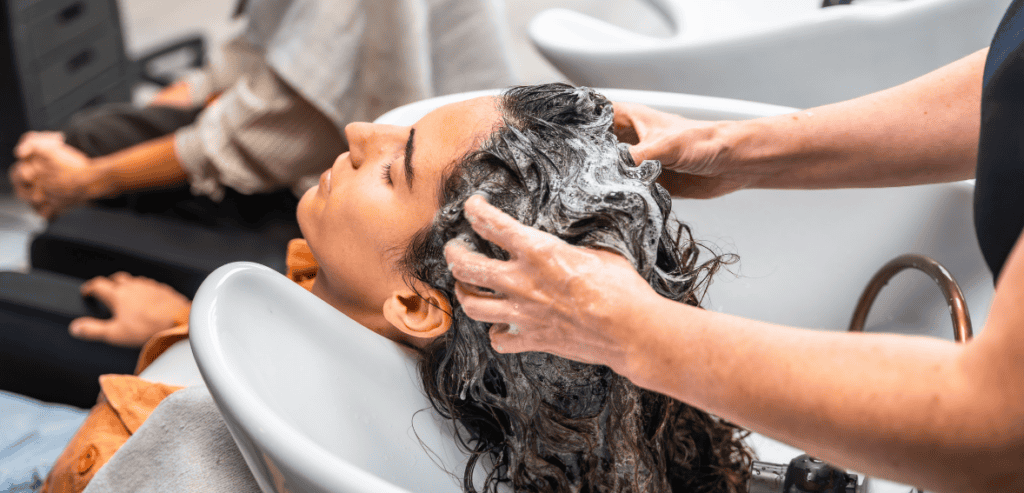
A straightforward method to leverage purchase history is to link it to the service the customer received that day.
Suppose a customer comes in for a hair color service. If they’ve bought color-safe shampoo before and it’s been 3 months since their last purchase, that’s a great time to recommend a refill. A facial client is called for an acne treatment. If they’ve never bought an acne home-care product, that’s an opportunity for an intentional recommendation.
The recommendation is the goal.
Customers appreciate product recommendations more when they see the urgency. It’s not just an item at the register; they are being told how to preserve, protect, or enhance the service they just received.
The recommendation is the goal
This method is highly effective, especially when staff employ the following:
- “This will help protect your color at home since we refreshed it today.”
- “I noticed you didn’t pick up a moisturizer, and you mentioned dryness before, so I think this will help.”
- “Because you book this treatment often, I would use this to maintain your results between visits.”
It feels more consultative than sales.
Opportunity Identification for Replenishment Products
Using purchase history to predict when a client may be running low on a product is an effective tool.
Take-home products usually have a predictable consumption cycle. A cleanser may last 1-2 months. A shampoo & conditioner set may need to be replaced every 6-10 weeks, depending on hair length and washing frequency. Serum, SPF, or treatment creams usually follow a similar pattern.
If your POS or client management systems track these purchases, your team can flag replenishment moments before the client even checks out.
This is true because the suggestions put forward are easy to understand and are accepted. They are already familiar with the product and have previously agreed to purchase it. The conversation transitions from a sales pitch to a need for the product.
This simplifies and improves the client’s overall experience.
In order to ensure the suggestion becomes a selling point of great value to the client, the following is suggested:
- Before or during the client appointment, review the last purchase dates.
- For repeat-purchase clients, investigate previous purchases and avoid focusing on 1 specialty item.
- When referencing a previous product, do so in a way that is not overtly promotional.
- Explain that people do not need to have the product, and people have to have a substitute, prefer to, or be given the option of a substitute.
- A suggestion to repeat a purchase, in a timely manner, demonstrates superior customer service and should be highlighted as such.
Suggest Relational Products to Clients through their Purchase History
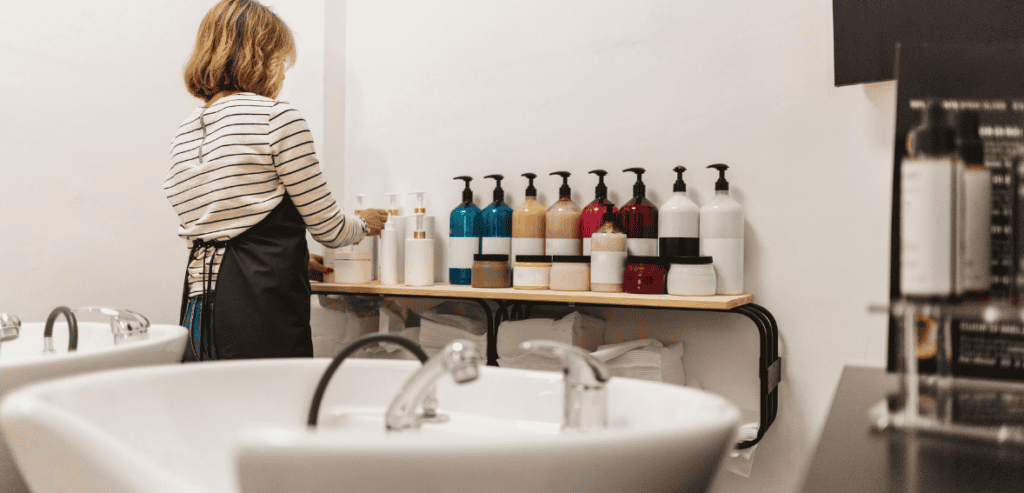
The purchase history provides further suggestions for logically consecutive products.
Customers who buy shampoo without conditioner may need a companion product with a matching benefit. Customers who buy cleanser and moisturizer but skip SPF may be missing a product in their routine. Customers who book brow services and purchase brow gel may benefit from an add-on pencil or conditioning serum.
The best cross-recommendations provide a full routine, address a defined issue, or maintain the benefits of a service.
Examples include:
- Hair clients who buy smoothing products may need a heat protector.
- Skincare clients who buy exfoliation products may need a barrier-supporting, hydrating product.
- Lash clients who book full appointments frequently may need an extension-cleanser.
- Massage clients who buy relief muscle cream may benefit from bath soaks or recovery tools.
The focus should be on linking the offer to previously purchased products. Recommendations that deviate from the customer’s existing habits may reduce trust.
Classifying Clients According to Their Buying Patterns
Not all clients should be given the same recommendations.
Purchase history can be used to cluster clients by behavior, enabling staff to tailor their recommendations. The approach can be as simple as a mental model. It can drastically improve the quality of the recommendations.
Common client segments may include:
Loyal Repeat Buyers
These clients trust your retail recommendations and reorder items multiple times. With these clients, checkout can be streamlined to include refills, seasonal updates, and one strategically added item.
Service Only Clients
These clients tend to book and show up for the services, but they rarely purchase items for home use. They may lack education, the products may be too expensive, they may lack a clear rationale for using home care products, or it may be a combination of these factors.
Product Explorers
These clients enjoy purchasing new products and may be open to purchasing new product launches, limited editions, or upgrades. They tend to be responsive to curation.
Lapsed Retail Buyers
These clients used to purchase products but have since stopped. This may indicate retail product fatigue, budget constraints, a lack of tangible results, or simply forgetting to purchase. Because of their history, you have the opportunity to ask what changed and suggest accordingly.
Segmenting clients encourages staff to move away from one-size-fits-all selling and instead offer more personalized services.
Staff Training to Read History Without Being Robotic

Data matters, but the way it is delivered matters just as much.
If the staff does have a meaningful exchange, even the best purchase history insights will fall flat. Clients do not wish to be analyzed, so they should avoid using a history to be robotic. It should not serve as a script.
The goal should be a combination of all three rather than being overly rigid.
Instead of saying, “You purchased Brand X Repair Serum 84 days ago,” the staff member could say, “You’ve used the repair serum before. Did that work well for you?” This is a more human and conversational approach. It opens the dialogue and allows the client the chance to provide feedback that may be useful.
When training staff, focus on three main areas:
- Identifying trends in client purchases and service history.
- Formulating trends into actionable, client-centered recommendations.
- Phrasing product recommendations as questions.
The last step in this process is vital to the client experience. A simple question makes a client feel more involved in the process rather than being a product of a rigid or robotic process.
Make Actionable, Concrete Recommendations.
In most cases, vague product recommendations will be disregarded. For example, if a client is told, “You should really use something at home for that,” they may nod politely and ignore the suggestion. However, a more actionable recommendation, “Because your skin is getting dry between facials, I’d suggest this barrier cream at night and this SPF during the day,” is much more concrete and actionable.
In most cases, vague product recommendations will be disregarded. For example, if a client is told, “You should really use something at home for that,” they may nod politely and ignore the suggestion. However, a more actionable recommendation, “Because your skin is getting dry between facials, I’d suggest this barrier cream at night and this SPF during the day,” is much more concrete and actionable.
When trends are used, they are that much clearer and more specific when answering the above questions. Instead of being presented with a wall of options, limit it to one or two products that align with the client’s needs and goals.
When clients have fewer choices to make during appointment booking and checkout, decision fatigue is reduced, and checkout is streamlined.
Use Technology for the Right Recommendations
If you have salon, spa, or clinic business software, you likely have more customer history than you utilize.
The better software allows the team to see:
- Recent retail purchases
- Frequency of visits
- Notes on services provided
- Preferences for products
- Membership or package details
- Spending habits
This information is available before the appointment, during the consultation, or at checkout. Some companies set up internal notes for products to remember to recommend at checkout.
The goal is to have your team walk up to the checkout counter with the order prepared and ready to recommend.
Good technology ensures the team is more prepared, the recommendations are more uniform, and ultimately, the clients have an improved experience.
Avoid Mistakes When Using Purchase History
Personalization and hyper-personalization do not equate.
To make recommendations unhelpful, consider the common mistakes below:
- Do not talk about the data more than three times. Cut details on their purchasing history and habits.
- Do not make dozens of suggestions. In most cases, 1 or 2 suggestions are more than enough.
- Do not ignore felt dissatisfaction. If a client stopped purchasing something, consider the reason.
- Do not recommend the upper-class products by default. Match the recommendation to the client’s usual spending range.
- Consider each checkout an opportunity to sell. Educating the customer can be the best option, as it leaves the door open for them to return.
Purchase history should be used to improve relevance, not to create a sense of urgency.
Create a Checkout Framework
To improve your retail performance, the framework should be the same across your entire team.
An example of a basic checkout framework is:
- Before the appointment ends, review the client’s services and purchase history.
- Determine one refill product or one add-on product based on timing and the client’s needs.
- Relate the suggestion to the outcome of the service performed, or to a concern previously discussed.
- Be sure to ask a personalized question to tailor the suggestion.
- Be sure to explain your recommendation and provide a simple outline of the steps required to use the item.
- Document the outcome of the sale, as this will help you make smarter recommendations in the future.
This kind of framework will help your employees to avoid sounding repetitive. It will also provide a positive recommendation experience for your customers.
This Method Builds Trust and Increases Revenue
When retail sales are to be increased, rather than focusing on the customers, many businesses focus on persuasion. In fact, the focus should be on relevance.
When the client believes the recommendation is for them rather than their checkout total, the likelihood of purchasing the take-home products increases. Because purchase history drives the client’s needs and values, relevance, and then a sense of urgency.
This ultimately results in improved performance for all parties involved.
For the client, this new system translates into less ambiguity and ease with maintenance between visits. For the business, this translates into more retained clients, higher value clients, and more revenue per visit. These minor process improvements, over time, will translate into big revenue growth.
What’s more, this does not require a more aggressive sales culture. It simply demands a more educated one.
Conclusion
An example of making retail more personal, useful, and effective is leveraging client purchase history to suggest retail products at checkout.
Your staff should not have to rely on generic upselling techniques. Instead, they should be able to suggest items based on real purchase trends, service history, and time that seamlessly align with the client’s routines. This not only enhances the checkout experience but also promotes better results at home and fosters trust that lasts beyond a visit.
The most successful businesses don’t sell harder; they sell smarter. In fact, when a business pays attention, it stands out. When your staff knows what clients have bought, what they need, and how to relate that to a successful outcome, checkout becomes an extension of great service.
Frequently Asked Questions
What is the best way to recommend an item so as not to come off as ‘salesy’?
The best method to avoid this is to make the suggestion relevant, specific, and concise. Link it to the client’s service, routine, or purchase history and explain how it will help. When a suggestion is tailored to a real need, it will feel more like guidance than a sales pitch.
How do you approach a client who has never purchased retail products before?
Begin with one item and a clear benefit connected to the service they just received. Clients who have never purchased retail products tend to prefer practical, straightforward recommendations to a complete regimen.
How often should staff check the client’s purchase history?
Ideally, staff should check it before the appointment is over, and before they get to checkout. A quick check at recent services and product purchases can help them provide a better recommendation.
What products are the easiest to suggest based on purchase history?
It’s usually repeat-purchase products and add-ons tied to a regimen. Shampoo, conditioner, cleanser, moisturizer, SPF, serum, and post-service maintenance products tend to be good options because the need to replace them drives repeat purchases, and the results are directly tied to the product.